
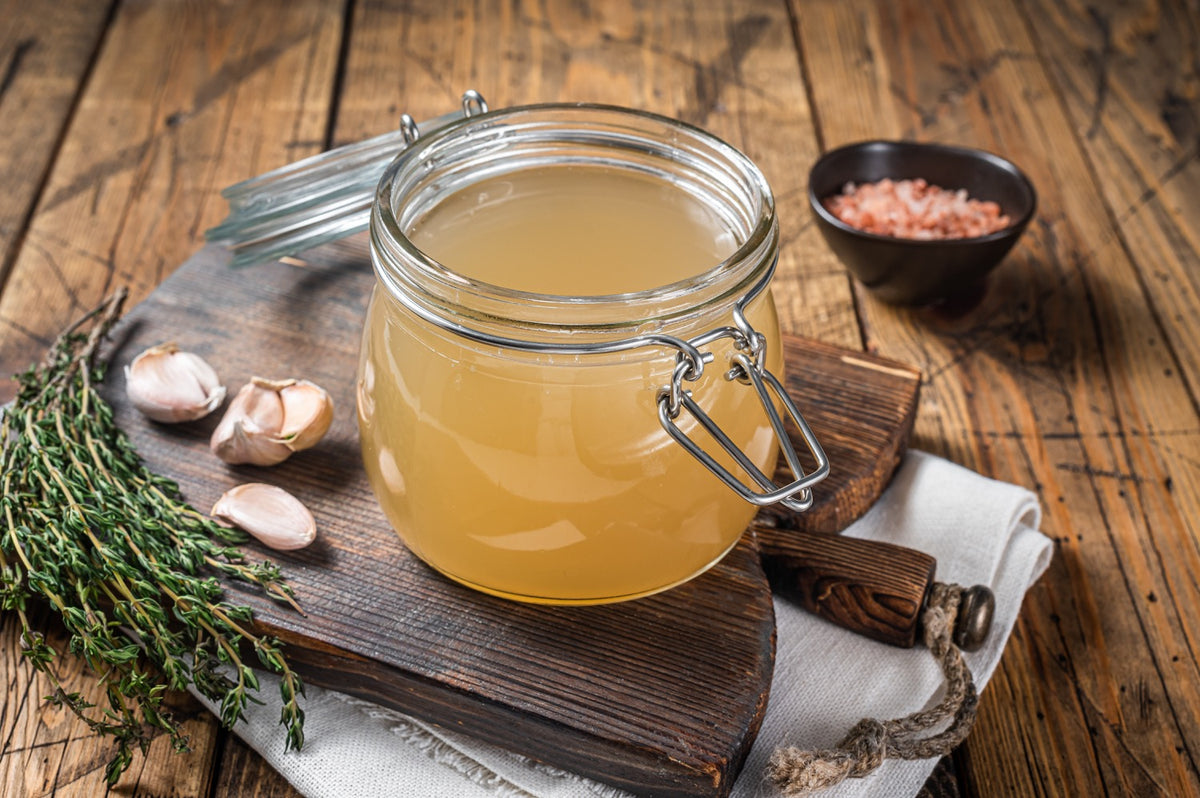

What is bone broth?
Bone broth is a broth obtained by simmering bones and joints in water, for example beef or chicken bones.
Prepared plain, salted or spiced, it can be enjoyed as a drink or used in any kind of cooking.
It is not a new food, but rather a forgotten one that our ancestors used every day. Often presented as a traditional home remedy, it contains compounds of interest for health such as collagen, glutamine, glycine, minerals, etc.
An excellent source of collagen
Collagen is a structural protein that is essential to the body. It gives the skin its firmness. The elasticity of tissues is due to collagen. This protein contributes to the elasticity of tendons and ligaments, so it is good for our joints. A loss of collagen contributes to the breakdown of cartilage.
Bone broth can provide our body with collagen and may thus contribute to joint comfort. However, an analysis showed that its content of collagen amino acids (glycine, proline, hydroxyproline) is lower and more variable than that of the collagen supplements used in research (Alcock et al., 2019).

Bone broth: a grandmother's remedy that is still relevant today
The virtues of bone broth have long been praised by our grandmothers. It is traditionally used to support the body during several ailments. Bone broth also helps the body to defend itself better against external aggressions. Among the conditions for which this grandmother's remedy is used are osteoarthritis, arthritis, colds, allergies, etc. A laboratory study observed, for example, that chicken soup could slow the migration of certain inflammatory cells (Rennard et al., 2000), although this does not prove an effect in humans.
Bone broth is also good for healthy joints. It contains a high level of collagen, which is an essential element for the health of bones, cartilage and other connective tissues.
Our grandmothers were therefore right to make bone broth a favourite remedy. Even today, it is part of several naturopathic remedies.
Can it relieve the symptoms of osteoarthritis?
Osteoarthritis is described as a disease that attacks the cartilage of the joints. It causes pain and stiffness in the affected joint. Bone broth contains elements such as chondroitin sulfate and glucosamine.
These are also found in products intended to relieve osteoarthritis or joint pain. This is not, however, proof of the benefits of bone broth for osteoarthritis: the amounts provided vary, and even as supplements, the effectiveness of glucosamine and chondroitin is still debated (GAIT study, Clegg et al., 2006). Regularly consuming these substances through bone broth is possible.
If joint pain or stiffness persists, see your doctor for a diagnosis and appropriate care.
Bone broth: a wealth of minerals
The benefits of bone broth also depend on the minerals it can provide to your body. The mineral content depends on the ingredients used to prepare the bone broth, which is made of bones, marrow and connective tissue. Marrow, for example, contains essential minerals such as iron, manganese, boron, zinc and selenium.
It is also credited with antioxidant properties, as it can provide vitamin A. Vitamin A is a major antioxidant that counteracts premature ageing of the body's cells. The body is thus better able to resist and fight aggressions and free radicals.

Improves intestinal health
Being rich in collagen, glutamine, glucosamine and chondroitin, bone broth supplies the intestinal flora with these key elements, which are necessary for the proper functioning of the gut microbiota.
Often presented as a natural remedy for digestive health, bone broth may help relieve dysbiosis and intestinal permeability, although studies in humans remain limited.
Bone broth to eliminate toxins
You can also consume bone broth to help eliminate toxins. It is a habit often recommended after overindulgence. Bone broth is reputed to support the liver's action in eliminating toxins.
However, for bone broth to deliver all these benefits, the ingredients should come from a good source, for example organic beef bone broth. Make the right choice to enjoy all the benefits of bone broth.
Precautions and contraindications
- Lead: bones can store lead. A small study measured, in organic chicken broths, a lead concentration several times higher than that of the water used (Monro et al., 2013). Vary your diet and favour bones from controlled sources.
- Salt: commercial broths can be very salty. Be careful if you have high blood pressure, kidney disease or follow a low-salt diet.
- Medical treatment: bone broth is a food. It does not replace a prescribed treatment for osteoarthritis, arthritis or a digestive disorder. If in doubt, ask your doctor for advice.


