
When the day's effort deserves lasting support
A blend of two milk proteins: 58% casein-rich isolate (MPI)(slow-release) and 35% native whey (WPC)(fast-release).
A "dual-speed" protein, effective right after exercise and over time.
Contains ferments (Bacillus coagulans) and lactase for greater digestive comfort, all flavoured with organic cocoa — no unnecessary ingredients.
- Whey Native Protimuscle® Chocolate Nutrimuscle
- Vitamines et compléments alimentaires
- Brand
- Nutrimuscle
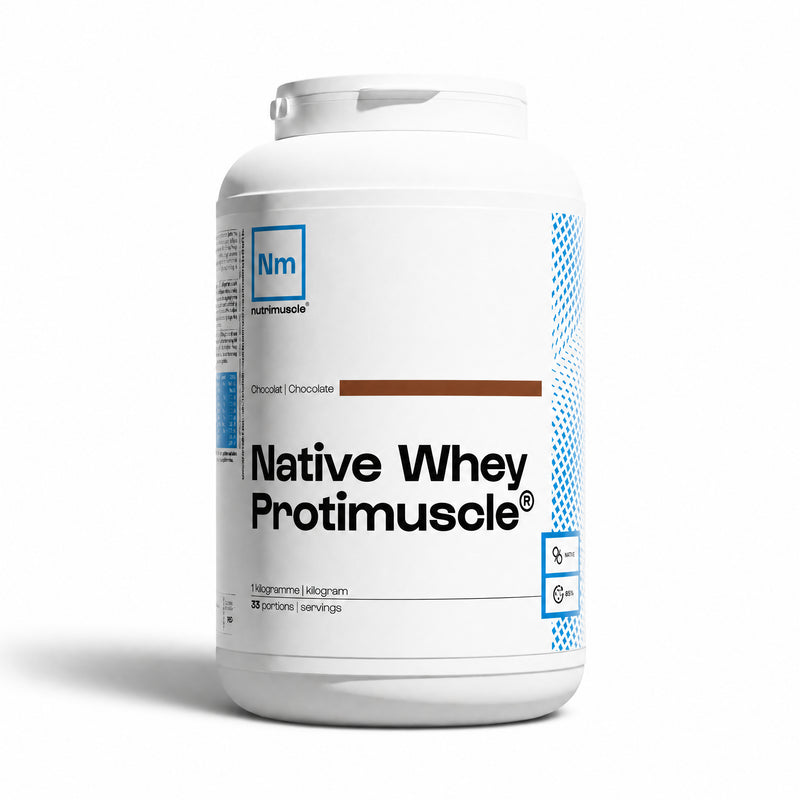


Whey Native Protimuscle® Chocolate Nutrimuscle
Nutrimuscle
-
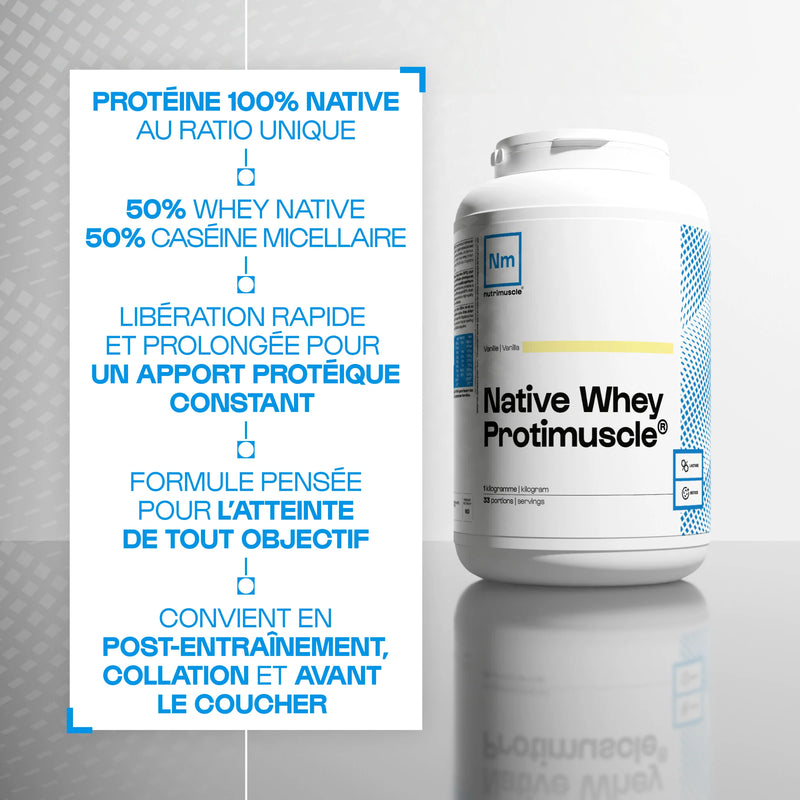
Fast whey + slow casein
-
Satiety effect, weight control and craving management
-
Easier digestion (lactase + live cultures)
-
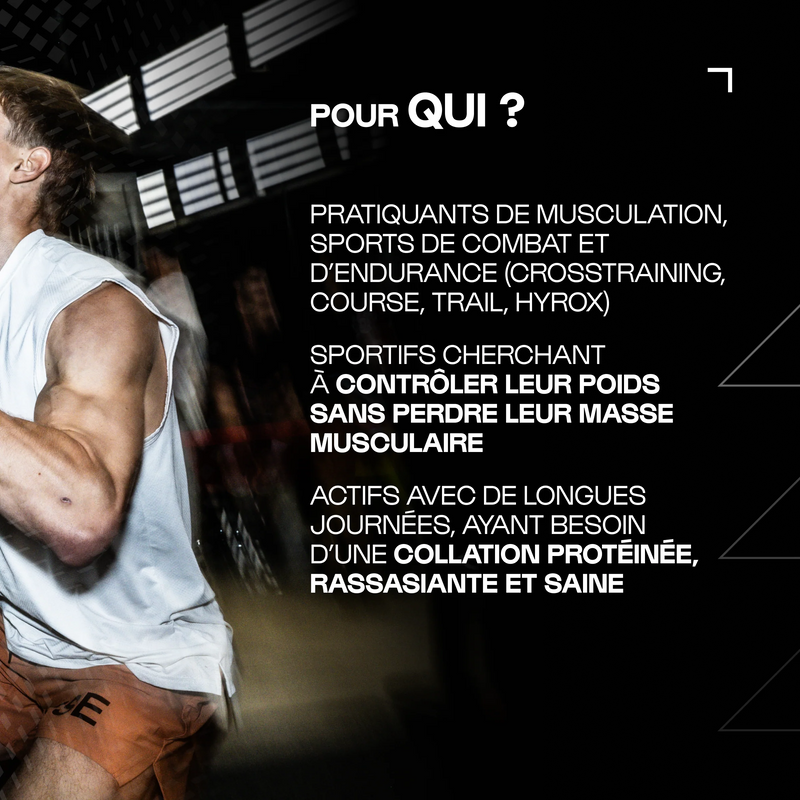
Perfect after a workout or as a snack
Delivery and payment
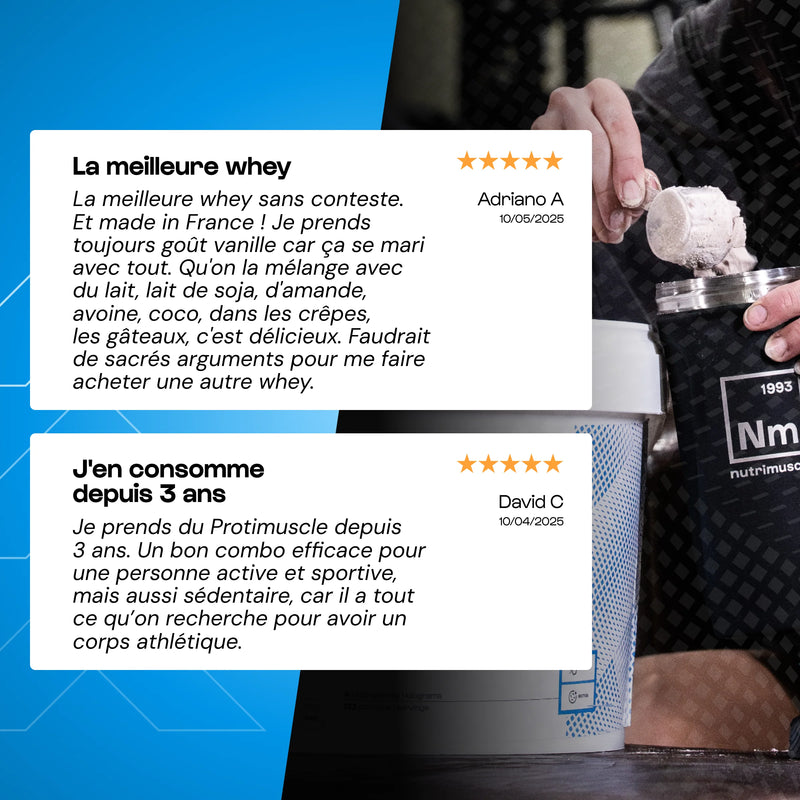
Customer reviews
Rated 5 out of 5 by 2 review
No reviews yet.
What it changes for you
Fast whey + slow casein
A 50/50 blend of native whey and micellar casein: two absorption speeds brought together in a single shake.
Satiety effect, weight control and craving management
Its slow release extends the feeling of fullness and helps stretch the gap between hunger pangs, making it easier to manage your eating habits day to day.
Easier digestion (lactase + live cultures)
Enriched with lactase and Bacillus coagulans, for better digestive comfort — even if you are sensitive to lactose.
Perfect after a workout or as a snack
Whey works fast after exercise, casein takes over for several hours: for a steady protein intake, muscle support, and lasting energy — no dips, no gaps.


Our commitments
-
Origin
Developed and manufactured in Belgium by Nutrimuscle.
-
Formulation
MPI (58%) and native WPC (35%), non-instantised, organic lean cocoa (5%), inulin, lactase and Bacillus coagulans GBI-30 6086, sucralose
-
Quality
Manufactured in a facility certified to NF EN 17444, ensuring strict controls against banned substance contamination.
Whey and casein are the two major milk proteins used in strength training. One is fast, the other slow, and the good news is that they do not work against each other — they complement each other. Rather than asking yourself whey or casein, which one to choose, the smartest approach is to get the best of both at once. This article explains what casein is, what whey isolate is, the difference between these milk proteins, the benefits of micellar casein, and why bringing them together in a single supplement optimises your muscle development. It is well worth reading, as it clarifies the role of each protein and helps you avoid the timing mistakes that hold back your results.
What is casein and where does it come from?
Casein is a protein derived from milk — more precisely, it is the main fraction of cow's milk proteins, making up around 80% of total protein content, with the remainder being whey. When we say it is "slow", this comes down to its structure: in contact with the stomach, it forms a gel that slows digestion. This gradual absorption releases amino acids into the bloodstream over several hours.
There are different types of casein depending on the manufacturing process. Micellar casein, or native casein, is obtained through gentle filtration that preserves the micelles exactly as they exist in milk. By contrast, caseinate — such as calcium caseinate — results from a more intensive process that partly denatures the protein. The micellar form is the closest to pure casein, and it is the one most favoured by strength training enthusiasts.
What is whey protein?
Whey is the other major source of milk protein. It is the liquid portion that separates during cheesemaking. Filtered and then dried, it produces a powder that is very rich in protein, valued in sports nutrition for its speed of absorption. Where casein is slow, whey is fast: its amino acids reach the bloodstream in under an hour, making it a practical protein choice right after training.
Several forms of whey exist, depending on their protein content. Concentrate contains a little more carbohydrate and fat, while isolate is more extensively filtered for a higher protein concentration and a lower lactose content. Whey protein remains one of the most widely used supplements in the world, as it delivers a large dose of essential amino acids — particularly leucine (closely linked to protein synthesis).
What is the difference between whey and casein?
The main difference between whey and casein lies in digestion speed, and therefore in the pattern of amino acid release into the bloodstream. Whey is digested quickly and triggers a surge of amino acids at a precise moment. Casein's slow diffusion, on the other hand, maintains a steady flow for several hours, which helps limit catabolism between intakes.
The differences between whey and casein do not stop there. Micellar casein naturally contains more calcium, as this mineral is bound to the micelles in milk. Whey, for its part, is richer in certain branched-chain amino acids. But the key thing to understand is that these two milk proteins are not in competition: the speed of one and the duration of the other cover different needs. That is precisely why combining them works so well.
What are the different types of casein?
When it comes to casein protein as a dietary supplement, you will mainly encounter two families. The first is micellar casein — a native form obtained through microfiltration that keeps the micelles intact. It is the most sought-after among athletes, as it offers the slowest digestion and a complete amino acid profile, close to the native casein found in cow's milk.
The second family covers caseinates, the most common being calcium caseinate. These forms are produced through a chemical process that makes the protein more soluble, but partially denatures its structure. Caseinate digests a little faster than pure micellar casein, while still remaining slow. Knowing these types of casein helps you choose a quality product: for the optimal "slow" effect, native micellar casein is the benchmark.
What are the benefits of casein?
The benefits of casein rest largely on its slow release. By providing a steady supply of amino acids into the bloodstream, it helps maintain muscle mass and limit catabolism — that is, the breakdown of protein in your muscle fibres when the body runs low on fuel. For an athlete, this is particularly useful during a cutting phase or a period of fat loss.
Beyond the muscle, this protein has other strengths. Its slow digestion creates a strong feeling of fullness, making it an interesting protein powder for those watching their appetite. It also makes an excellent snack between meals: a serving keeps you going far longer than a fast whey. Finally, its calcium content provides a notable mineral contribution that should not be overlooked.
Why take micellar casein at night?
This is its best-known use: taking casein before sleep. During the night, the body goes several hours without any food intake, and muscles need a steady flow of amino acids to recover. Taking micellar casein in the evening before bed feeds your muscles through this long fast — something a fast whey, already absorbed within an hour, simply cannot do.
This evening intake supports muscle recovery and protein synthesis during sleep, while helping to reduce overnight catabolism. That is why casein is ideal as the last intake of the day. Many athletes make it a ritual: a shaker before bed, sometimes mixed with a little milk to boost the milk protein content further.
How to use casein in strength training?
Using casein is not limited to the evening. In strength training, you can take it at several points depending on your goals. A serving generally provides around 25 to 30 g of protein — approximately 25 g of casein depending on the flavour. This dose covers the needs of a single intake to support protein synthesis and muscle building. Taking casein can replace a light meal, serve as a snack between meals, or complement a whey.
In terms of preparation, you mix the powder with water or milk. With milk, the texture becomes creamier and the protein content goes up further still. For everyday nutrition, the micellar form also works well in cooking — in recipes such as protein creams or puddings. The key is to spread your protein intake throughout the day to maintain a good level of amino acids in the bloodstream.
Whey or casein: do you really have to choose?
It is the question everyone asks, and the answer is simple: no. Setting whey against casein makes little sense, because they do not play on the same field. Whey delivers a rapid surge of amino acids after training, while casein sustains a prolonged supply between meals and during the night. These are two different functions, not two rivals.
Real progress comes from no longer having to pick one. Rather than buying two tubs and alternating between them, you can bring both proteins together in a single supplement. You then get the speed of whey and the duration of casein, with no compromise. The question of "which one to choose" shifts: it is no longer about preferring one over the other, but about enjoying both at once.
Why combine micellar casein and whey in a single product?
Combining micellar casein and whey brings two absorption speeds together in one intake: whey immediately triggers the availability of amino acids, while casein extends their diffusion over several hours. This duo covers both the immediate need after exercise and the prolonged need of muscles at rest — two phases that are essential to muscle development, muscle growth, and long-term recovery.
This is exactly the logic behind a hybrid product that brings whey and casein together in equal parts. Rather than juggling two protein powders, you have a versatile supplement that works after training, as a snack between meals, or in the evening. This combination of the two proteins is as practical as it is effective: one shaker, from morning to bedtime, for all strength training enthusiasts and athletes alike.
Casein, calcium and quality: what to look for before you buy?
Because native micellar casein comes from cow's milk, it retains a naturally high calcium content, with this mineral integrated into the micelles. This contribution is a welcome bonus. When buying, check whether you are looking at a native micellar form or a simple caseinate: the former is closer to pure casein and offers the slowest digestion.
Also look at the protein content per serving, the quality of the protein source, and the possible presence of additives. A good dietary supplement displays a clear composition and a minimally processed milk protein. For sports nutrition, favour brands that are transparent about the origin of their dairy ingredients and their filtration process: that is what sets a quality protein apart from a low-grade powder.
The key takeaways
- Casein is a slow-digesting milk protein; whey is a fast-absorbing milk protein. That is the main difference between the two.
- What is micellar casein? The native form of casein, obtained through gentle filtration, which preserves the micelles and delivers the slowest amino acid release.
- The benefits of casein: supporting muscle mass, helping to limit catabolism, prolonging satiety, and providing calcium.
- During the night: taking micellar casein before bed feeds your muscles through the overnight fast and supports recovery.
- Whey and casein are not rivals: whey covers the post-training window, casein covers the rest of the day and the night.
- The real advantage is combining both: a product that brings micellar casein and whey together offers speed and duration in one shaker, for muscle gain and muscle development alike.
- Types of casein: choose native micellar casein over a simple caseinate for a truly slow digestion.
- Reference dosage: around 25 to 30 g of protein per intake, spread throughout the day according to your strength training goals.


