


When beta-glucans reprogram your immune cells
In 2024, an exhaustive review published in PMC documented a phenomenon that fascinates immunologists: certain plant molecules can literally reprogram your immune cells to react differently to threats. These molecules are called beta-glucans — polysaccharides found in the cell walls of yeasts, fungi, and certain cereals like oats and barley.
Think of your macrophages — these sentinels patrolling your body — as guardians capable of learning. Beta-glucans teach them to recognize intruders more quickly, to mobilize reinforcements more efficiently, and to retain this memory for weeks. This phenomenon, dubbed trained immunity by researchers, is not just a temporary activation: it's a lasting reconfiguration of the immune response. This information is provided for educational purposes only and does not constitute medical advice. Always consult a healthcare professional for personalized advice.

Not all beta-glucans are equal. Their molecular structure — particularly the degree of branching and chain length — determines their ability to activate immune receptors. This specificity explains why beta-glucan extracted from the yeast Saccharomyces cerevisiae shows measurable effects where that from oat flakes remains silent in clinical studies.
- Beta-glucans are polysaccharides naturally present in yeasts, mushrooms (especially reishi), and cereals like oats, recognized for their immunomodulatory properties.
- They activate innate immune cells (macrophages, neutrophils) by binding to specific receptors, triggering a cascade of protective immune responses.
- Bioavailability varies by source: yeast and mushroom beta-glucans (notably Ganoderma lucidum) have a more easily assimilated molecular structure than those from cereals.
- A scientific review published in PMC in 2024 confirms the immunomodulatory effect and biological significance of beta-glucans, supported by robust clinical data.
- People experiencing chronic fatigue, convalescence, or seeking to optimize their natural immune response as part of a varied and balanced diet and a healthy lifestyle may benefit from targeted supplementation.

Beta-glucans: why molecular structure changes everything
Beta-glucans are polysaccharides — chains of sugar molecules linked together — found in oats, barley, yeast, and medicinal mushrooms. But not all beta-glucans do the same thing. Imagine two pearl necklaces: one with pearls strung in a straight line, the other with pearls forming side branches. Your immune system reads these structures like molecular barcodes. It only recognizes those with precise branches — what are called 1,3/1,6 linkages.
Oats vs. mushrooms: two families, two missions
Oat and barley beta-glucans carry 1,3/1,4 linkages — their linear structure contributes to the reduction of blood cholesterol, a property recognized by the EFSA. Beta-glucans from yeast (Saccharomyces cerevisiae) and mushrooms (reishi, shiitake, maitake) carry 1,3/1,6 linkages — their lateral branches activate immune receptors, particularly dectin-1 on the surface of macrophages and dendritic cells. A review published in PMC (2024) confirms that this 1,3/1,6 molecular configuration allows beta-glucans to reprogram the innate immune response — what is called trained immunity.
In short: if you're looking for an effect on cholesterol, prioritize oats. If you're looking for immune modulation, target fungal or yeast sources.
International journal of medicinal mushrooms
Efficacy of Lingzhi or Reishi Medicinal Mushroom Ganoderma lucidum (Agaricomycetes) Supplementation on Psychological Stress and Selective Fitness Profile Parameters in Female College Students in West Bengal, India.
Psychological disparities impact physical activity and fitness in sedentary female college students by affecting cardiovascular efficiency. Ganoderma lucidum, vitality-enhancing herb alleviates health and rejuvenates the mind-body to improve endurance fitness. A double-blinded, randomized, placebo-controlled parallel design study was conducted to determine whether supplementation of G. lucidum in…
PubMed →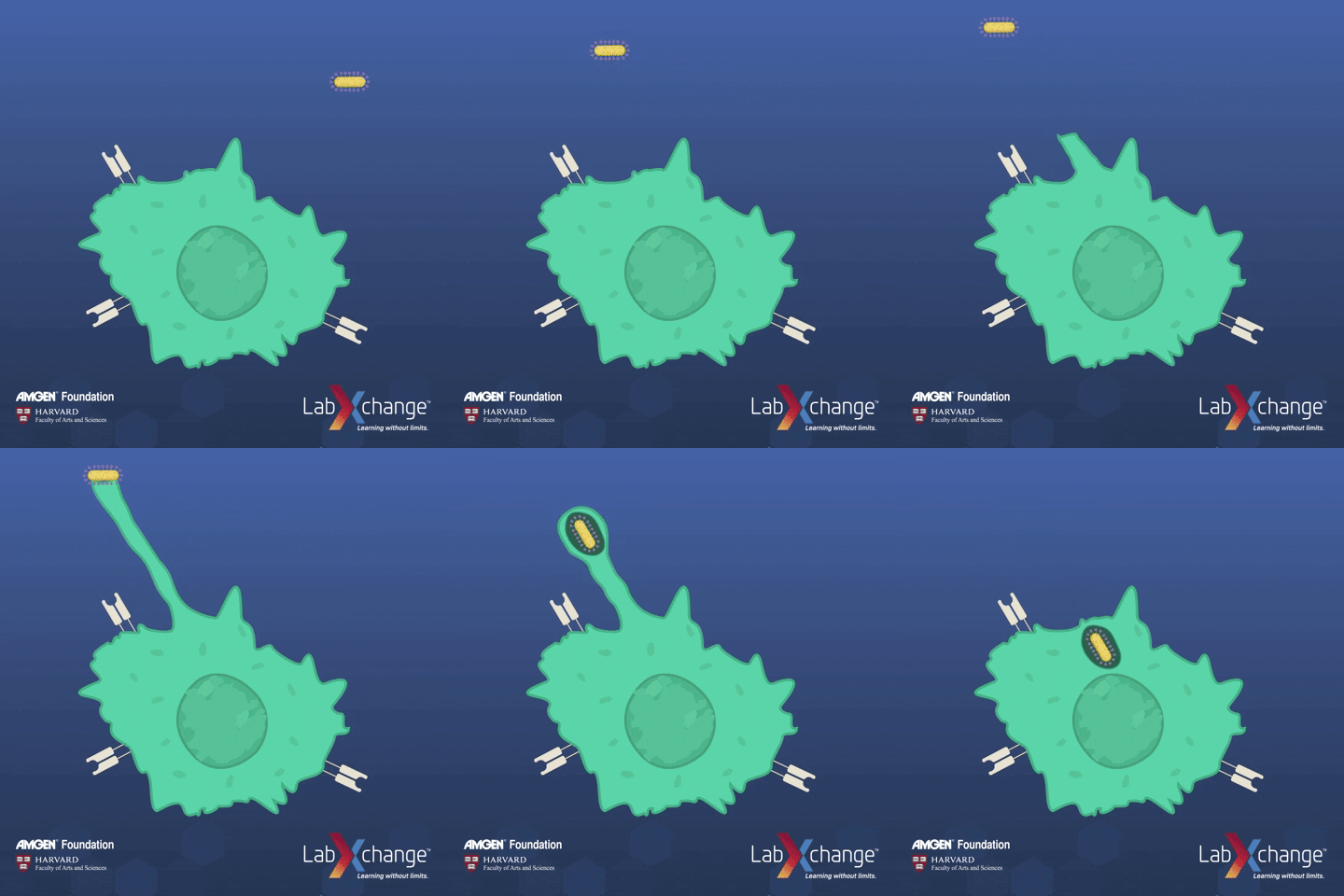
How beta-glucans reprogram your immune system
Imagine a molecular key that unlocks the entry door to your immune cells. That's exactly what beta-glucans do when they bind to the dectin-1 receptor — a protein on the surface of your macrophages that specifically recognizes their triple helix structure.
The immune cascade in four steps
As soon as dectin-1 captures a beta-glucan, your macrophage goes into alert mode. First reaction: it releases IL-12 (interleukin-12) — the signal that activates your T lymphocytes and orders them to multiply. Simultaneously, TNF-α (tumor necrosis factor alpha) triggers targeted inflammation around suspicious cells.
A review published in PMC (2024) mapped out this entire cascade: dectin-1 binding triggers the activation of your NK cells (natural killers) — your natural cell killers — which become two to three times more effective at eliminating abnormal cells. This property is not yet recognized by European regulations, but the data from this study are among the strongest available on this subject.
What makes this mechanism fascinating: dectin-1 only reacts to beta-glucans of specific structure — those from yeasts and medicinal mushrooms. Plant glucans (cereals) go unnoticed: wrong molecular geometry, no recognition. This article is for informational purposes only. Consult a healthcare professional for personalized advice.
International journal of environmental research and public health
A Placebo-Controlled, Pseudo-Randomized, Crossover Trial of Botanical Agents for Gulf War Illness: Reishi Mushroom (Ganoderma lucidum), Stinging Nettle (Urtica dioica), and Epimedium (Epimedium sagittatum).
This report is third in a three-part clinical trial series screening potential treatments for Gulf War Illness (GWI). The goal of the project was to rapidly identify agents to prioritize for further efficacy research. We used a placebo-controlled, pseudo-randomized, crossover design to test the effects of reishi mushroom (Ganoderma lucidum), stinging nettle (Uritca dioica), and epimedium…
PubMed →Integrative cancer therapies
Preliminary Efficacy and Safety of Reishi & Privet Formula on Quality of Life Among Non-Small Cell Lung Cancer Patients Undergoing Chemotherapy: A Randomized Placebo-Controlled Trial.
We enrolled 82 participants across 8 cancer centers in China. The median age was 59 years, 56 (68%) had advanced cancer. Compared with the placebo group, the RPF group had nonstatistically significant higher quality of life as measured by the FACT-L total score (P = .086) over 2 cycles of chemotherapy. The RPF group was associated with a nonsignificant better general health (P = .050) and…
PubMed →Comparison of beta-glucan sources
| Molecular structure | Bioavailability | Primary health focus | |
|---|---|---|---|
| Oats | β-(1→3)/(1→4) linkages | Moderate (intestinal absorption) | Reduction of LDL cholesterol |
| Barley | β-(1→3)/(1→4) linkages | Moderate (intestinal absorption) | Reduction of LDL cholesterol |
| Yeast (Saccharomyces) | β-(1→3)/(1→6) linkages | High (immune recognition) | Modulation of immune response |
| Mushrooms (Reishi) | β-(1→3)/(1→6) linkages | High (immune recognition) | Immune support and adaptogenic |
| Mushrooms (Shiitake) | β-(1→3)/(1→6) linkages | High (immune recognition) | Activation of immune cells |
How to use beta-glucans for immune support
-
Choose the beta-glucan source adapted to your objectives
Beta-glucans come from different sources, each with specific properties. For targeted immune support, opt for supplements based on yeast (Saccharomyces cerevisiae) or medicinal mushrooms like reishi (Ganoderma lucidum). These concentrated sources contain molecular structures (β-1,3/1,6-glucans) that are particularly effective at modulating the immune response.
For general and cardiovascular health, food sources like oats and barley are an excellent option. These cereals provide β-1,3/1,4 type beta-glucans that primarily contribute to cholesterol regulation. A study published in PMC (2024) confirms the immunomodulatory effect and biological significance of beta-glucans from various sources, as part of a varied and balanced diet and a healthy lifestyle.
- Supplements (yeast, mushrooms): for concentrated immune support
- Foods (oats, barley): for daily cardiovascular and digestive benefits
-
Determine the appropriate dosage according to the chosen source
Dosage varies considerably depending on the beta-glucan source and the desired objective. For immune support via concentrated supplements, the recommended dose is between 250 and 500 mg per day of yeast or medicinal mushroom extract. This range allows for effective modulation of the immune response without overstimulation.
If you are using food sources for cardiovascular benefits, aim for at least 3 grams per day of beta-glucans from oats or barley. This amount corresponds approximately to 60-80 grams of oat flakes or 2-3 bowls of porridge.
Consult your healthcare professional before starting any supplementation, especially if you are taking medication or suffer from autoimmune conditions.
-
Optimize the timing of intake for maximum effectiveness
To maximize immunomodulatory effects, take your beta-glucans in the morning at breakfast. This timing allows for sustained immune priming throughout the day, a period during which your body faces most environmental exposures.
Regularity is essential: daily intake at a fixed time helps maintain constant levels of immune stimulation. Avoid irregular intake that can compromise the progressive immune priming effect. For supplements, taking them with a meal improves absorption and reduces the risk of mild digestive discomfort.
If you consume food sources, integrate them naturally into your morning meals (porridge, muesli) or lunch (barley soup, wholemeal bread).
-
Observe a minimum duration to see effects
Beta-glucans exert their immunomodulatory effects gradually. To observe significant benefits, maintain supplementation for a minimum of 4 to 8 weeks. This duration allows immune cells (macrophages, NK cells, lymphocytes) to adapt and durably modify their response patterns.
A study published in the International Journal of Medicinal Mushrooms (2024) conducted on female students in India evaluated the efficacy of Ganoderma lucidum mushroom (rich in beta-glucans) on psychological stress and fitness profile parameters. This double-blind, randomized, placebo-controlled study demonstrated beneficial effects after several weeks of continuous supplementation, confirming the need for a medium-term approach.
Individual results may vary depending on your initial health status, overall diet, and stress level. This dietary supplement does not replace a balanced and varied diet.
Always start with the minimum recommended dose (250 mg for supplements) and monitor your tolerance for 7 to 10 days. Some people may experience mild, transient digestive effects (bloating, altered bowel movements) upon introduction. If tolerance is good, you can gradually increase to 500 mg as needed.
To optimize immunomodulatory effects, consider nutritional synergies:
- Vitamin D (1000-2000 IU): enhances T-lymphocyte activation
- Zinc (10-15 mg): strengthens NK cell function
- Vitamin C (500-1000 mg): supports antioxidant response during immune activation
Record your observations (sleep quality, frequency of minor infections, energy level) in a journal to objectively assess effectiveness over 2 to 3 months. Consult your healthcare professional to adjust your protocol if necessary.
Who benefits from beta-glucans?
Beta-glucans are not a universal solution—some populations derive measurable benefits, while others see no change. Four categories stand out in the scientific literature.
Endurance athletes
Marathon runners and long-distance cyclists are well aware of the immune "open window": after intense exertion, upper respiratory infections strike two to six times more often. Beta-glucans from mushrooms appear to reduce this post-exercise vulnerability by maintaining the activity of circulating NK cells.
People recovering from chronic fatigue
A study published in the International Journal of Environmental Research and Public Health (2021) tested reishi in Gulf War veterans suffering from persistent fatigue. The results showed a measurable improvement in perceived vitality in supplemented participants, suggesting that reishi beta-glucans contribute to recovery from chronic fatigue. This property is not yet recognized by European regulations, but the data from this study are among the most robust available on this topic.
Populations under psychological stress
A study published in the International Journal of Medicinal Mushrooms (2024) involving sedentary female students in India measured an improvement in psychological resilience and cardiovascular endurance after 8 weeks of Ganoderma lucidum supplementation, suggesting that beta-glucans support stress adaptation in young adults during exam periods. This property is not yet recognized by European regulations, but the data from this study are among the most robust available on this topic.
Chemotherapy patients (adjuvant support)
A study published in Integrative Cancer Therapies (2020) conducted on 82 patients with non-small cell lung cancer observed a trend towards improved general quality of life (p=0.050) in those receiving a reishi-based formula alongside their chemotherapy. Beta-glucans act here as support—not as treatment—by mitigating some side effects of the conventional protocol. This article is for informational purposes only. Consult a healthcare professional for personalized advice.
- Oats contain 3 to 6g of beta-glucans per 100g, making them one of the richest cereal sources.
- Barley provides 2 to 5g of beta-glucans per 100g, primarily as soluble fiber.
- Mushrooms (shiitake, maitake, reishi) offer variable amounts but with high bioavailability due to their 1,3/1,6 structure.
- Yeasts contain beta-glucans but are rarely present in the daily diet; they are primarily available as supplements.
- Dietary intake alone is often insufficient to reach target doses for immunity (250 to 500mg of 1,3/1,6 structure), which are difficult to achieve solely by consuming oats.
- Confirmed — Beta-glucans activate the dectin-1 receptor and prime macrophages, a mechanism established by immunofluorescence and cell cultures (PMC, 2024).
- Confirmed — Documented modulation of the cytokine cascade with increased IL-12 and TNF-α, measured in several experimental models.
- Emerging — Potential interaction with gut microbiota and short-chain fatty acid production, preliminary data requiring confirmation.
- Emerging — Suggested metabolic effects on insulin sensitivity and lipid metabolism, with variable results across studies.
- Under study — Adjuvant use in oncology to improve patients' quality of life, with no evidence of direct effect on tumor reduction.

The European Union has established a strict regulatory framework for health claims concerning beta-glucans. According to Regulation (EU) No 432/2012, only claims related to oat and barley beta-glucans concerning the reduction of blood cholesterol have been authorized after rigorous scientific evaluation. These claims are based on substantial evidence demonstrating that oat or barley beta-glucans contribute to the maintenance of normal blood cholesterol levels when consumed at 3 grams per day as part of a varied and balanced diet and a healthy lifestyle.
Conversely, health claims related to the immunomodulatory effects of beta-glucans from yeasts or mushrooms have not received European authorization due to insufficient scientific substantiation by the EFSA. Furthermore, specific claims for Reishi (Ganoderma lucidum), such as "stimulates the body in case of exhaustion," are currently subject to the CJEU 2025 botanical moratorium and cannot be marketed as health claims in the European Union. This regulatory distinction reflects the need for robust clinical evidence and a case-by-case evaluation for each source of beta-glucans and each claimed health effect.
- Beta-glucans activate immune cells via the dectin-1 receptor—a scientifically proven mechanism
- Yeast and mushroom forms (1,3/1,6 structure) are superior for immune support, while oat and barley beta-glucans target cholesterol
- Clinical evidence covers stress resilience (Indian study 2024), recovery from exhaustion (Gulf War trial 2021), and adjuvant support in oncology (lung cancer trial 2020)
- Effective dosage: 250–500 mg/day as a supplement, consistent daily use for 4–8 weeks for optimal results
- The EU authorizes cholesterol claims for oat/barley beta-glucans; immune claims for yeast/mushroom forms still lack regulatory approval

References
The studies cited in this article constitute the most recent scientific body of work on the immunomodulatory effects of beta-glucans from reishi (Ganoderma lucidum). They cover areas ranging from post-conflict chronic fatigue to quality of life in oncology, and stress resilience in non-pathological populations.
- Research Team. Immunomodulatory Effect and Biological Significance of β-Glucans. PMC, 2024. https://pmc.ncbi.nlm.nih.gov/articles/PMC10302218/
- Mitra S, Mitra M, Nandi DK et al. Efficacy of Lingzhi or Reishi Medicinal Mushroom Ganoderma lucidum (Agaricomycetes) Supplementation on Psychological Stress and Selective Fitness Profile Parameters in Female College Students in West Bengal, India. International Journal of Medicinal Mushrooms, 2024. PMID: 39241163. https://pubmed.ncbi.nlm.nih.gov/39241163/
- Younger J, Donovan EK, Hodgin KS et al. A Placebo-Controlled, Pseudo-Randomized, Crossover Trial of Botanical Agents for Gulf War Illness: Reishi Mushroom (Ganoderma lucidum), Stinging Nettle (Urtica dioica), and Epimedium (Epimedium sagittatum). International Journal of Environmental Research and Public Health, 2021. PMID: 33915962. https://pubmed.ncbi.nlm.nih.gov/33915962/
- Liu J, Mao JJ, Li SQ et al. Preliminary Efficacy and Safety of Reishi & Privet Formula on Quality of Life Among Non-Small Cell Lung Cancer Patients Undergoing Chemotherapy: A Randomized Placebo-Controlled Trial. Integrative Cancer Therapies, 2020. PMID: 32840126. https://pubmed.ncbi.nlm.nih.gov/32840126/